


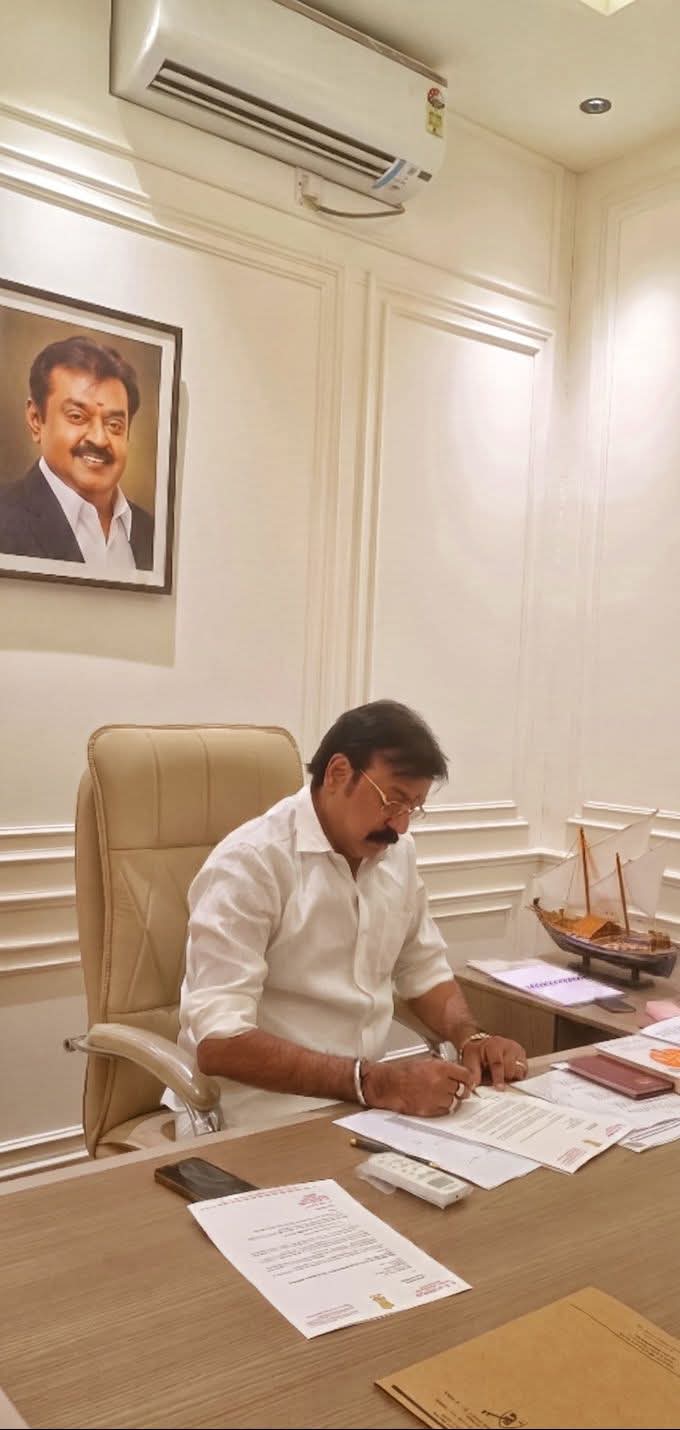
MP L.K. Sudheesh raised two key questions with the Central Government in the Rajya Sabha.
One question concerned child protection services, while the other inquired about traffic management and digital surveillance using AI technology on national highways. Union Ministers provided the following responses:
In the Rajya Sabha, MP L.K. Sudheesh questioned the Central Government regarding the implementation of the ‘Mission Vatsalya’ scheme, child protection services, unregistered child care institutions, procedures for the reunification of children across states, and vacancies within child protection systems.
Savitri Thakur, the Minister of State for Women and Child Development, provided a written reply to these queries.
The Minister stated the following:
Mission Vatsalya is a centrally sponsored scheme aimed at the care, protection, rehabilitation, and social reintegration of children. The Central Government monitors the scheme’s implementation through regular review meetings, Project Approval Board (PAB) meetings, field visits, and evaluation reports involving States and Union Territories.
Regarding unregistered child care institutions, Section 41 of the Juvenile Justice (Care and Protection of Children) Act, 2015, mandates the registration of all child care institutions. Penalties are imposed by law on institutions that fail to register. The responsibility for identifying, registering, inspecting, and regulating these institutions lies with State Governments and Union Territory administrations; the Central Government issues guidelines for this purpose from time to time.
Regarding national-level audits and child reunification, the Juvenile Justice Act, 2015, already contains comprehensive legal procedures for the rehabilitation, family reunification, and protection of children. The Minister stated that rehabilitation is provided to each child based on an individual care plan through family-based care, adoption, foster care, or support programs.
Furthermore, the Minister noted that an evaluation report released in 2025 by NITI Aayog’s Development Monitoring and Evaluation Office (DMEO) recommended the continued implementation of the ‘Mission Vatsalya’ scheme, citing its high relevance and effectiveness.
Regarding vacancies in child protection systems, the Minister explained that while the Central Government provides financial assistance for Child Welfare Committees (CWCs), Juvenile Justice Boards (JJBs), District Child Protection Units (DCPUs), State Child Protection Societies (SCPS), State Adoption Resource Agencies (SARAs), and Child Care Institutions, the responsibility for filling vacancies lies with the State Governments and Union Territories. The Central Government continues to review the situation and issue necessary instructions to expedite this process.
MP L.K. Sudheesh, who raised these critical issues in the Rajya Sabha, urged the Central Government to take sustained action to further strengthen child protection systems and ensure that destitute and vulnerable children receive quality care and rehabilitation services.
Also…
Nitin Jairam Gadkari responds to MP L.K. Sudheesh’s question in the Rajya Sabha regarding AI-based traffic management on national highways.
MP L.K. Sudheesh raised a significant question in the Rajya Sabha concerning Intelligent Transport Systems (ITS), AI-based traffic management, and digital surveillance facilities on national highways.
Union Minister for Road Transport and Highways Nitin Jairam Gadkari provided a written response to this query. In his reply, the Minister stated the following:
Advanced Traffic Management Systems (ATMS) are being implemented in a phased manner on national highways with the aim of enhancing road safety and reducing accidents.
Under this initiative, systems such as AI-based Video Incident Detection and Enforcement Systems (VIDES), Automatic Number Plate Recognition (ANPR) cameras, PTZ cameras, and surveillance cameras have been installed. These facilitate real-time traffic monitoring, violation detection, immediate accident identification, and rapid rescue operations.
Currently, ATMS projects are being implemented on key national highway corridors, including the Bengaluru–Mysuru, Dwarka Expressway, Lucknow Ring Road, UER-II, and Delhi–Agra routes.
The Minister also stated that no specific study has been conducted so far to determine whether these technologies have resulted in reduced travel time, traffic congestion, or fuel consumption.
Expenditures for ATMS systems have been included within the total costs of certain national highway construction projects.
It has been reported that funds have been allocated for specific projects: ₹3.63 crore for the Bengaluru–Mysuru project, ₹16.65 crore for the Dwarka Expressway, ₹55.69 crore for the Lucknow Ring Road, ₹28 crore for the UER-II project, and ₹49.03 crore for the Delhi–Agra corridor.
Furthermore,
The Central Government plans to implement Advanced Traffic Management Systems (ATMS) in a phased manner across all National Highways and Expressways with four or more lanes (covering approximately 52,647 kilometers) nationwide.
To achieve this, local, regional, and national control centers will be established to facilitate centralized monitoring, accident management, traffic analysis, and coordinated operations. The Minister also stated that a unified ATMS software platform, designed to operate with standardized protocols across the country, is currently under development.
MP L.K. Sudish raised this question in the Rajya Sabha to elicit detailed information regarding the Central Government’s initiatives to deploy modern technologies on national highways, enhance road safety, and ensure effective traffic management.